DAY 8 - January 7, 2002
Day eight began with an hour drive into
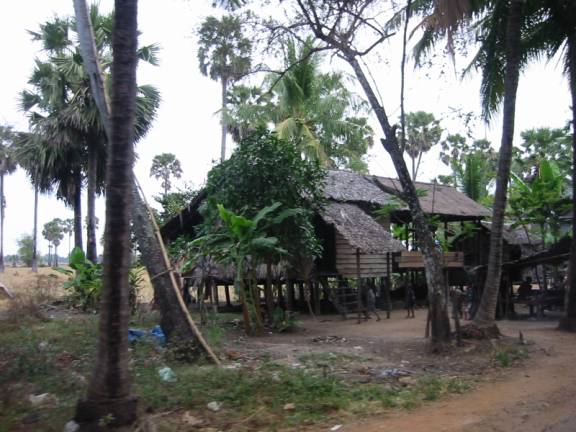
the country to Banteay Srei, the Citadel of Women. This is a fairly
typical home in the villages. |
 |
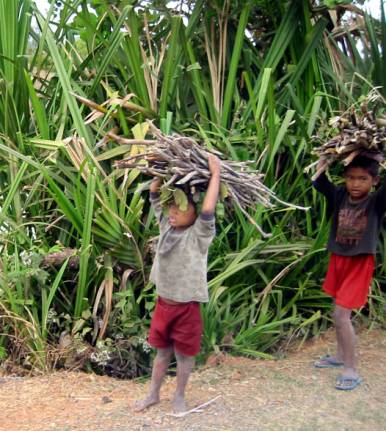 |
These are some kids we passed on the
way out. |
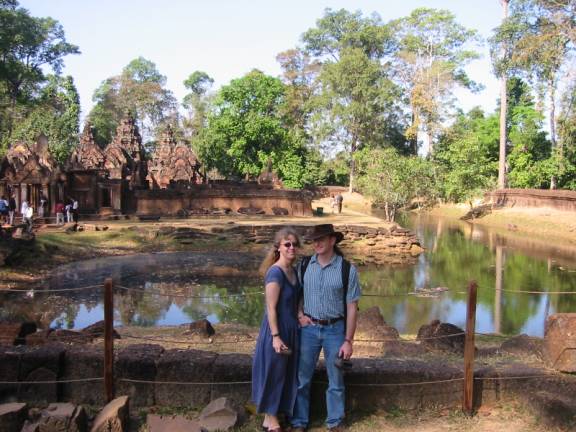
This is Don and Kari in front of the
moat surrounding the inner monastery of Banteay Srei. A Brahmin priest
built Banteay Srei in 967. This temple is smaller than all the others,
and everything is covered with very intricate detail. |
 |
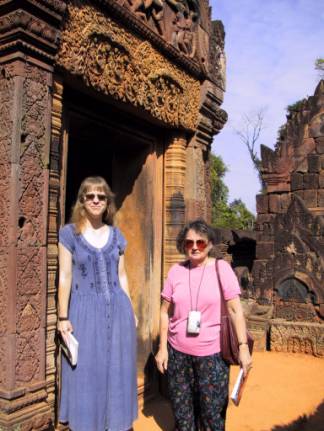 |
Linda and Kari in front of one of the
three towers. Two of the towers were dedicated to Siva and Vishnu, and
the entire temple was dedicated to Brahma. The intricate work over the
doorway is seen throughout this place. |
After lunch back in Siem Reap, we headed
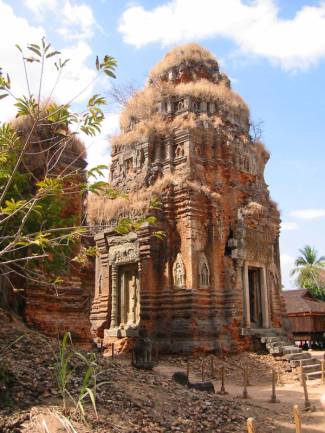
out to the Roluos Group of three Hindu sanctuaries. This is what remains
of Lolei, built in 893 by Yashovarman I in tribute to his predecessor,
Indravarman I. |
 |
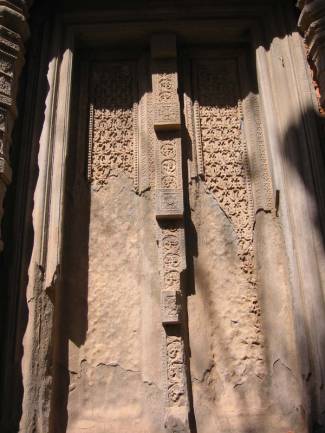 |
This picture shows the wear on sandstone
from rain, sun and wind. The top of the door shows the intricate carving
in the stone. The bottom of the door shows how the sandstone has eroded
away over the past eleven centuries. |
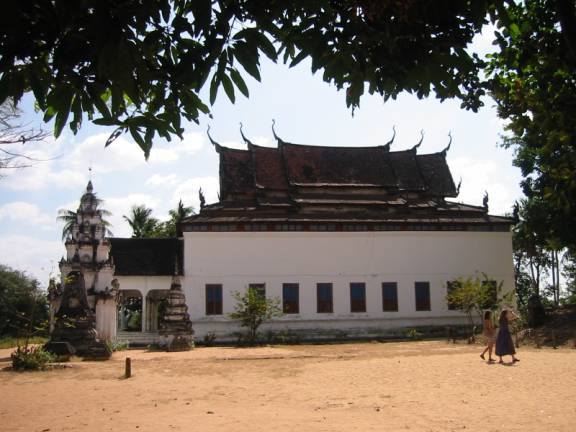
It was interesting to see that this
site currently has a working Buddhist Wat. Remember, when they were
built over 1000 years ago these were Hindu sanctuaries. This newer place
is located next to the towers of the previous picture, on the same high
ground. |
 |
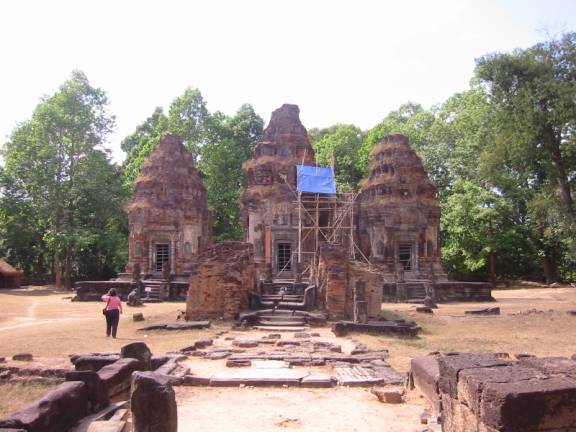 |
Our second afternoon stop was at Preah
Ko ('Sacred Ox'), built by Indravarman I in 879. The remains of Jayavarman
II--the founder of the Khmer empire--were cremated here. |
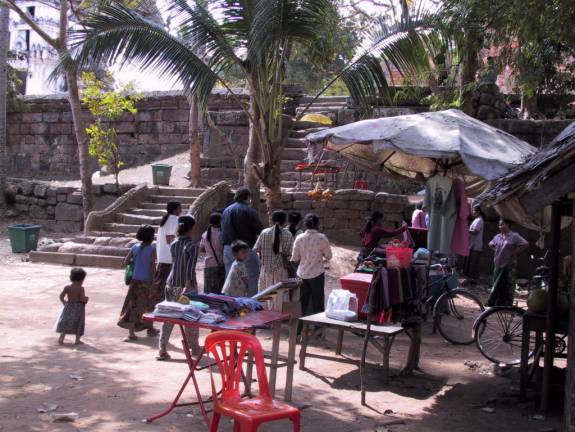
There were not as many people visiting
the Roluos group, so we were prime targets for the children selling
their wares in front of the temples. Here is Kirby going down for the
count. |
 |
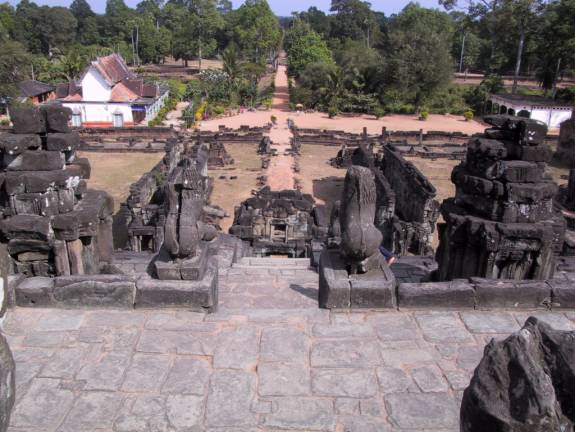 |
Built by Indravarman I in 881 of sandstone
and restored in the 12th century of stone, Bakong is the
largest of the Roluos group. Crouching lions guard the stairways of
this five-tiered temple. The corner of each tier has an elephant standing
watch. In the distance you can see the remains of the wall that surrounds
this temple, then the working Buddhist Wat on the left (within the moat)
and finally the tree-lined sandstone bridge over the now-dry moat. At
the far side of the moat another wall is seen to the right. |
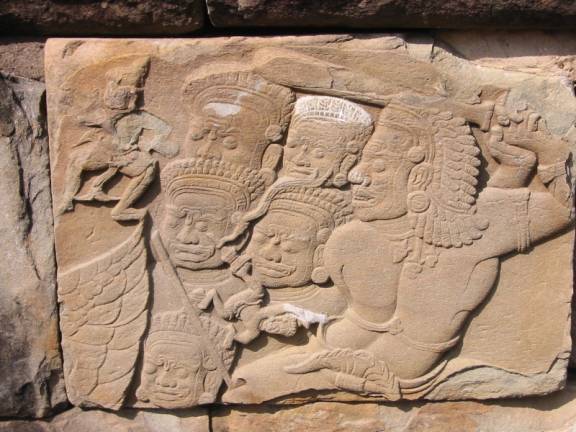
This is a detail of one of the sandstone
bricks in the wall. |
 |
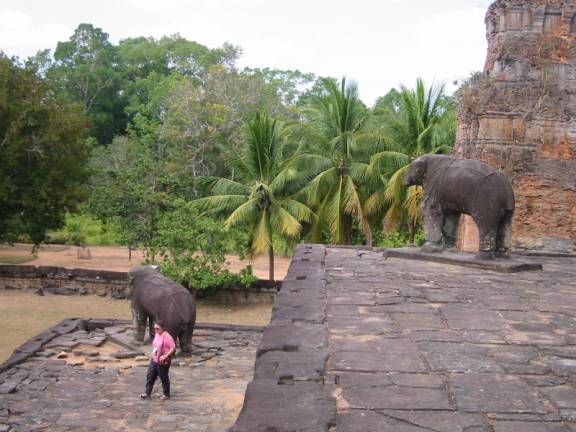 |
Each corner of the five tiers was watched
over by an elephant. All of the elephants have lost their trunks in
the past eight centuries since the restoration. Behind the upper elephant,
you can see the remains of one of the original brick towers. |
After Bakong we headed back to Siem
Reap and later met with Alex Ratti and his group from the UC Berkeley
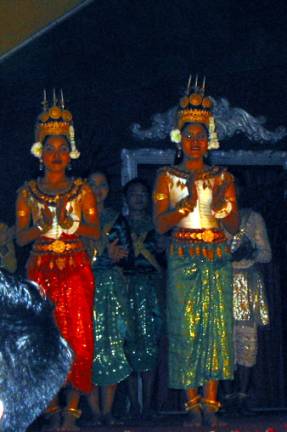
Haas Business School for dinner and Cambodian Classical Dance. |
 |